Design today is faster, smarter, and more automated than ever before. With AI tools generating visuals in seconds and algorithms streamlining workflows, it’s easy to believe that creativity can be automated. But great design still needs one thing no machine can replicate: the human signal.
The Role of Intuition
While machines rely on data, humans operate on emotions and intuition. Designers often make decisions based on nuance – a proportion that communicates balance, a color that creates trust, a layout that breathes. These are not just aesthetic preferences, but deeply human judgments shaped by culture, emotion, and experience.
This doesn’t mean rejecting technology – it means redefining our role alongside it. Graphic and brand designers still perform hands-on design work, but our primary role has evolved. We are translators of complexity, shaping vision into compelling, coherent designs. Technical skills still support our work, though they have become less central thanks to new technologies. True value now comes from guiding projects, directing creative processes, and ensuring that ideas are realized with clarity, purpose, and impact. Design is no longer just about making—it’s about shaping, orchestrating, and bringing vision to life.
Designing with Sensitivity
In a world saturated with visuals and interfaces, a designer’s true strength lies in sensitivity and humanity. Listening carefully, understanding deeply, and guiding with trust are what make design impactful.
It’s not just about what we make. It’s about how it lands and how it lasts.
Conclusion
As we move into a new era of design, shaped by automation and acceleration, the real value of the designer will be their ability to bring humanity into the frame: to create with clarity, not just capability; to speak to people, not just personas.
Interview: Florian Klein
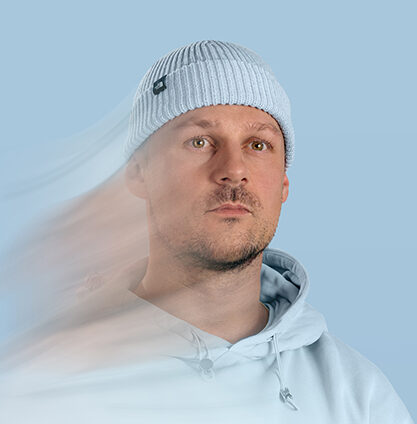
Florian Klein is a Designer at Distylerie. With a focus on narrative clarity and visual sensitivity, his work explores how thoughtful design can create connection in an increasingly automated world.
Editor: Luana Perotto
Article published on 30 June 2025
FAQ
What is the human role in design in the age of AI?
AI accelerates production but doesn’t replace judgement. Intuition, sensitivity and point of view give a brand meaning – that human signal decides relevance.
Can AI replace brand design?
No. AI is a powerful tool for speed and volume, but direction, meaning and differentiation come from people. distylerie deliberately combines both.
What is the “human signal” in design?
It’s the felt point of view behind a brand – what creates resonance, not just attention. In a world of automated content, that becomes the difference.
How does distylerie combine AI and human creativity?
We use AI within clear brand systems – for speed and scale – and secure meaning, consistency and quality through human creative direction.
What does AI mean for brand management?
AI changes the how, not the why: it automates routine and opens new possibilities, but strategy, positioning and attitude remain human decisions. Brands that separate the two gain speed without losing their core.
Does AI change the role of a branding agency?
Yes, but it makes good brand leadership more important, not obsolete. As a branding agency in Zurich, distylerie uses AI as a tool while staying responsible for idea, curation and quality – where machines reach their limits.
How does a brand stay distinctive in the age of AI?
Through a clear brand core and a consistent brand system. The more content is generated automatically, the more a distinctive attitude, language and visual world set a brand apart – the unmistakable can’t be generated, it has to be designed.